


Quick Takeaways: Employee Shuttle Safety Tips NYC
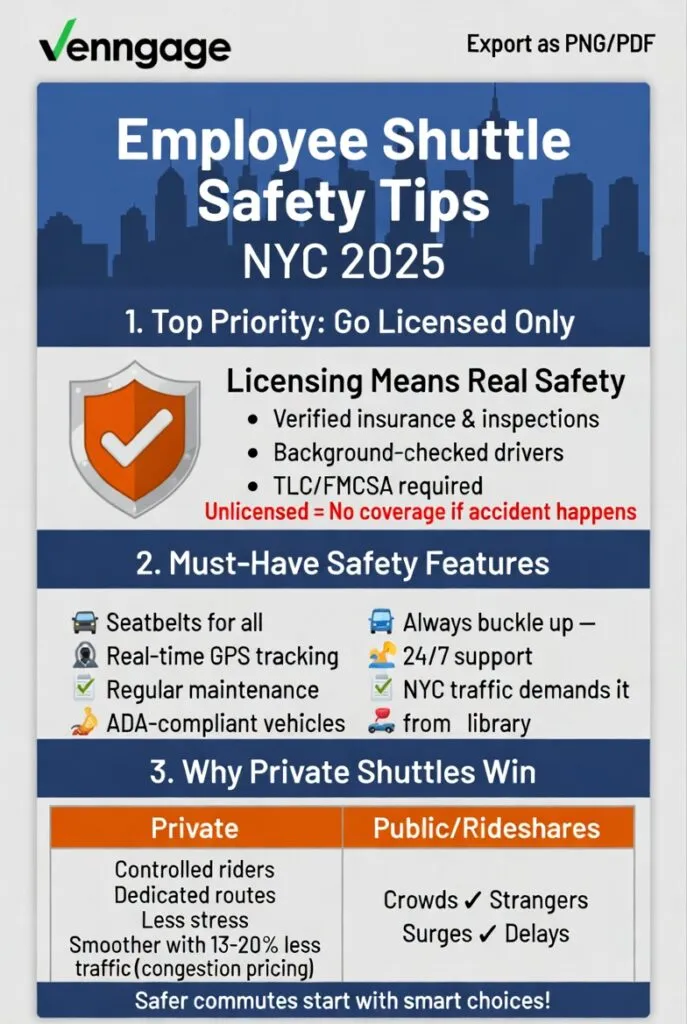
- Stick with licensed operators every single time—verify TLC or FMCSA numbers so you know insurance and inspections are real. Unlicensed means you could be on your own if something happens.
- Pick companies that actually screen drivers properly: background checks, drug tests, regular training, and people who’ve driven these streets for years.
- Good vehicles have working seatbelts for everyone, GPS you can track, and drivers who know what to do in an emergency.
- Board at the agreed spot, buckle up right away, stay seated, and speak up if anything feels wrong.
- Private shuttles give you the most control—known passengers only, live tracking, no random pickups.
- Solid companies usually have clean safety records you can look up on FMCSA or DOT sites.
- Rain, snow, or rush hour chaos—experienced drivers and smart routing beat everything else.
- When a company offers shuttles, it’s a signal they care about getting you there without the daily subway gamble.
- Most reputable fleets are ADA-ready these days—ramps, wheelchair spots, no extra fees.
- Real emergencies? The best operators have someone you can call 24/7.
- Reviews aren’t perfect—no service is—but established names give you far fewer surprises.
- Buckle up. Seriously. The stop-and-go here is brutal.
Employee shuttle safety tips NYC—that’s what this guide is all about. Hi, Emily here. I’ve been knee-deep in New York City’s ground transportation world for more than twenty years. I’m on the editorial team at ZoloBus with folks like Alex Freeman, who’s been dodging potholes and cabbies since before smartphones existed (he’s got the TLC certifications and DOT connections to prove it). Between us, we’ve arranged rides for huge office crews, night-shift workers heading home at 3 a.m., families juggling car seats and strollers, and execs who can’t afford to be late. We’ve lived the headaches and the wins. If you want the full rundown on our backgrounds, head over to zolobus.com/editorial-team.
We write these guides from real experience—late nights on the phone with dispatchers, coffee with drivers, emails from riders who loved (or hated) their commute. No corporate scripts, just what we’ve seen work when it comes to employee shuttle safety tips NYC.
I’ve lost count of the mornings I’ve spent rerouting groups around accidents or construction. There’s nothing quite like the quiet relief when everyone texts “made it” after a smooth ride. But in a city that never slows down, employee shuttle safety tips NYC aren’t optional—they’re the whole point.
Think about a cold, wet December rush hour. Everyone’s tired, the streets are slick, and the subway’s running late again. Then your team climbs into a warm shuttle with a driver who’s done this route a hundred times. That’s what good employee programs deliver when you follow basic employee shuttle safety tips NYC. Congestion pricing helped thin out some traffic—reports say 13-20% fewer cars in the zone on bad days—but Manhattan is still Manhattan. You need people behind the wheel who stay calm when everyone else is losing it.
One thing I’ll never stop repeating: unlicensed services can skip the insurance and checks you’d assume are automatic. I’ve heard too many “what if” stories over coffee with drivers. Regulated operators aren’t perfect, but they’re accountable—a core part of any solid employee shuttle safety tips NYC list.
These programs really grew after the pandemic—companies wanted fewer crowded trains, more predictable arrivals. Now in late 2025 we’re seeing more electric and hybrid vans, better apps that reroute around crashes, and safety gear that wasn’t standard five years ago. It’s getting better, slowly, especially when companies take employee shuttle safety tips NYC seriously.
If any of this is ringing true for you, let me know in the comments or our quick survey. We actually read them and tweak future pieces.
Realistic Options for Employee Shuttle Safety Tips NYC
No single choice is best for everyone. Private dedicated shuttles tend to feel safest and most reliable, but plenty of companies mix options depending on budget and headcount. Here’s a straightforward comparison based on what we see day-to-day and the latest public numbers, all tied to practical employee shuttle safety tips NYC.
| Option | Rough Per-Person Cost (group contracts) | What’s Good for Safety | What’s Trickier | How Reliable It Usually Feels |
|---|---|---|---|---|
| Dedicated Corporate Shuttles (GOGO Charters, DPV, Zeelo, Swoop, etc.) | $50–$150 (drops a lot with ongoing contracts) | Known drivers, tracking apps, regular maintenance, passenger lists | Costs more; need to plan ahead | Usually excellent—clean safety records |
| Licensed Commuter Vans | $20–$60 | TLC oversight, set routes | Can get packed; double-check the license | Solid when legit |
| Rideshare Pools or Corporate Accounts (Uber/Lyft) | $15–$45 (watch surges) | Easy tracking in the app | Strangers, driver lottery, price swings | Hit or miss |
| Traditional Car Services (Carmel, Dial 7) | $40–$80 | TLC rules apply | Traffic eats time and money on metered rides | Good on paper |
| Scheduled Shared Shuttles | $25–$70 | Professional operation, group focus | Extra stops add time | Pretty dependable |
| MTA Buses & Subways | $2.90–$7 | Cheap and everywhere | Crowds, delays, zero privacy | Day-dependent |
| Boutique Providers (Red Oak, NYC Charter Bus Co.) | Custom | Tailored rules and extras | Can book up fast | Strong reputation |
Prices move around—time of day, exact route, how many people. Always get a fresh quote. And again: if it’s not licensed, you’re rolling the dice on insurance and inspections—one of the most important employee shuttle safety tips NYC has to offer.
These days a lot of private operators use HOV lanes or quiet side streets that opened up after congestion pricing. Winter weather still throws curveballs, so vehicles with good tracking and drivers who aren’t guessing shine brightest. Book early for the crazy hours—common sense, but easy to forget when planning employee shuttle safety tips NYC.
Quick nods to a few standouts: DPV and GOGO put real effort into driver vetting; Zeelo’s app is sharp for live updates; Swoop scales nicely if your team grows.
Insider Employee Shuttle Safety Tips NYC
I’ve collected these from drivers who’ve become friends, riders who email thank-yous (and complaints), and the occasional regulator who’ll talk off-record. Here’s what makes a difference in real employee shuttle safety tips NYC:
- Look up the company’s USDOT or FMCSA number and check their safety score—good ones are proud of it.
- Ask how they screen and train drivers. The answers tell you a lot.
- Use the tracking link and share it with someone back home if you’re ever nervous.
- Buckle up the moment you sit—no exceptions. The braking here is unforgiving.
- Something off? Tell the driver or call the number on the app. Legit companies want to know.
- Big groups—ask for assigned seats ahead of time. Makes headcounts easy.
- WiFi and outlets keep everyone chill and productive (calmer passengers notice more).
- Late nights, private beats public every time for peace of mind.
- Stow bags so they can’t fly if the driver slams the brakes.
- Set up the app properly before day one—notifications on, payment saved.
Had a commuter tell me once that switching to a company shuttle felt like getting two hours of her life back every week. Another grumbled about a snowy delay that added 45 minutes. That’s the real world—mostly great when you pick carefully, occasional headaches no matter what, but solid employee shuttle safety tips NYC tilt the odds in your favor.
Advice Tailored to Different Employee Shuttle Safety Tips NYC Scenarios
Solo riders love the “nobody random gets on” feeling of private shuttles.
Whole teams traveling together get camaraderie and easier coordination.
Anyone with kids—ask about proper restraints up front.
Executives usually want quiet space and WiFi they can count on.
Accessibility—most established companies have ADA vehicles ready, no upcharge.
Tight budget—licensed shared options keep costs reasonable without cutting corners on the big stuff.
Want nicer rides—plenty of fleets offer leather seats and extras.
Eco focus—more electric and hybrid vans every month, quieter and cleaner.
FAQ
Employee Shuttle Safety Tips NYC: Why is licensing the top priority?
When it comes to employee shuttle safety tips NYC, nothing beats starting with proper licensing. I always tell people to verify TLC or FMCSA authorization right away because it guarantees insurance coverage, regular vehicle inspections, and driver vetting. Unlicensed operators often skip these essentials, leaving passengers exposed if an accident happens. Over my twenty years coordinating rides, Ive heard stories that make it clear: cutting corners on licensing can turn a routine commute into a real problem. Regulated services are accountable to authorities, which means higher standards overall. Whether youre arranging group bus service or daily runs, checking those USDOT numbers gives peace of mind in a city where traffic never forgives mistakes.
Employee Shuttle Safety Tips NYC: How do professional drivers make a difference?
Professional drivers are the backbone of solid employee shuttle safety tips NYC. Companies that invest in thorough background checks, drug testing, ongoing training, and local experience deliver smoother, safer rides every time. These drivers know the quirks of Manhattan streets, alternate routes around jams, and how to handle sudden stops without drama. In rush hour or bad weather, that expertise shines. Ive seen inexperienced drivers panic in gridlock, while seasoned ones stay calm and defensive. For premium charter bus NYC style comfort in daily commutes, screened professionals reduce risks dramatically. Its not just about getting there; its about arriving without unnecessary stress.
Employee Shuttle Safety Tips NYC: What vehicle features should I look for?
Great employee shuttle safety tips NYC always include checking vehicle features. Look for working seatbelts for every seat, real-time GPS tracking, dash cams, and well-maintained brakes and tires. Modern fleets often add automatic emergency braking and clean interiors too. These arent luxuries; theyre essentials in stop-and-go traffic. I recommend operators with regular maintenance schedules because breakdowns or faults create hazards. Many top providers maintain excellent FMCSA records showing consistent upkeep. When arranging group bus service, asking about these details upfront saves headaches later. Simple things like functional seatbelts have prevented worse outcomes in sudden stops more times than we like to think.
Employee Shuttle Safety Tips NYC: Are private shuttles safer than public options?
Yes, private shuttles often feel safer for many reasons tied to employee shuttle safety tips NYC. You get controlled passenger lists, no random strangers boarding, dedicated routes, and live tracking apps colleagues can follow. Public MTA buses or subways mean crowds, less privacy, and unpredictable delays. Private options let companies set standards, like assigned seating for headcounts. Ive coordinated both, and employees consistently say private feels more secure, especially late nights. That said, licensed public transport is regulated too. For daily employee runs, private usually wins on comfort and control without huge cost jumps when split across a group.
Employee Shuttle Safety Tips NYC: How can I check a companys safety record?
Checking a companys safety record is one of the easiest employee shuttle safety tips NYC. Just visit the FMCSA website and search their USDOT number, or look at TLC records for local operators. Good companies often share clean scores proudly. Many top providers have zero violations over years, which tells you a lot about maintenance and driver standards. I always do this before booking group bus service. It takes minutes and reveals patterns you wont see in marketing. Riders on forums mention switching after finding spotty records elsewhere. A strong safety history usually means fewer surprises on the road.
Employee Shuttle Safety Tips NYC: What role does congestion pricing play in safety?
Congestion pricing has indirectly boosted employee shuttle safety tips NYC by reducing overall vehicles in the zone, sometimes 13 to 20 percent on peak days. Fewer cars mean slightly smoother flows and less aggressive maneuvering. Professional drivers in USDOT-licensed buses can use optimized routes or HOV lanes more effectively now. That translates to calmer rides and lower stress behind the wheel. Ive noticed private shuttles benefiting most since they avoid random traffic spikes. Still, Manhattan remains busy, so experienced drivers and tracking apps stay crucial. The change helps, but it doesnt replace core safety habits.
Employee Shuttle Safety Tips NYC: How important is real-time tracking?
Real-time tracking is huge in employee shuttle safety tips NYC. Most reputable services offer apps where you or colleagues can watch the shuttle live. It reduces worry during delays, helps with timing, and adds accountability. If something feels off, you have proof of location. I always suggest sharing the link with someone back at the office or home. In bad weather or construction detours, seeing the route adjust in real time feels reassuring. Many group bus service providers include this standard now. Its a small feature that makes a big difference in perceived and actual safety.
Employee Shuttle Safety Tips NYC: Should I always buckle up on shuttles?
Absolutely, buckling up is non-negotiable in employee shuttle safety tips NYC. The citys constant stop-and-go, potholes, and sudden lane changes make unrestrained passengers vulnerable. Even at low speeds, inertia can cause injury. I remind every group I coordinate: seatbelt the moment you sit. Good drivers enforce it too. Studies and accident reports back this up; seatbelts drastically reduce risk. No matter how short the commute or familiar the route, skipping this step is asking for trouble. Make it habit, and encourage coworkers to do the same.
Employee Shuttle Safety Tips NYC: Are employee shuttles worth the investment for companies?
Companies find employee shuttles worth it when following employee shuttle safety tips NYC. They signal care for staff well-being, cut commute stress versus subways or surging rideshares, and often improve punctuality. Employees arrive calmer and more productive. With group contracts, per-person costs become reasonable, especially compared to individual reimbursements. Ive seen retention perks too; reliable transport matters to workers. Add safer, controlled environments over public options, and the value grows. Many firms report fewer late arrivals once they start dedicated programs. Its an investment that pays back in morale and reliability.
Employee Shuttle Safety Tips NYC: How do ADA features affect shuttle safety?
ADA-compliant features greatly enhance employee shuttle safety tips NYC for everyone. Ramps, secure wheelchair tie-downs, priority seating, and low floors make boarding safer and prevent rushed movements. Reputable fleets offer these standard without extra charges. It ensures inclusive access while maintaining overall standards. Ive coordinated mixed-ability groups where proper equipment avoided awkward or risky situations. These features often come with broader safety upgrades since compliant operators tend to maintain everything rigorously. Choosing ADA-ready USDOT-licensed buses means safer rides for passengers of all needs.
Employee Shuttle Safety Tips NYC: What about late-night or early-morning commutes?
Late-night or early-morning shifts benefit most from private shuttles in employee shuttle safety tips NYC. Public options feel less secure at odd hours, with fewer people around. Private means known passengers, professional drivers, and direct routes. Tracking apps add reassurance for waiting family. Ive arranged many overnight runs where employees specifically requested dedicated service for peace of mind. Lighting inside vehicles, reliable scheduling, and 24/7 dispatch support matter here. Its when controlled environments shine brightest over random rideshares or empty stations.
Employee Shuttle Safety Tips NYC: How are electric or hybrid shuttles changing safety?
Electric and hybrid shuttles are improving employee shuttle safety tips NYC in quiet ways. They run smoother and quieter, reducing driver fatigue on long routes. Regenerative braking feels more predictable, and lower centers of gravity help stability. Many new models include advanced safety tech standard. Eco-minded companies switching fleets report happier drivers and passengers. Maintenance differs but regulated operators handle it well. The shift supports cleaner air without compromising core safety when you stick to established providers. Its a positive trend making daily commutes feel better overall.
Sources
- NYC Taxi and Limousine Commission (TLC)
- NYC Department of Transportation (DOT)
- Wikipedia: NYC TLC Overview
- Federal Motor Carrier Safety Administration (FMCSA)
- GOGO Charters NYC
- DPV Transportation
- Zeelo NYC
- Swoop NYC
- NYC Charter Bus Company
- Red Oak Transportation
- zolobus.com
Sponsored by ZoloBus—we’re upfront about that—but everything here stands on its own. We lean on public data from the TLC, NYC DOT, FMCSA, and honest reviews from actual commuters. Checked and current as of December 24, 2025. Still, things change fast in this city; always confirm the latest with the source.