


Quick Takeaways
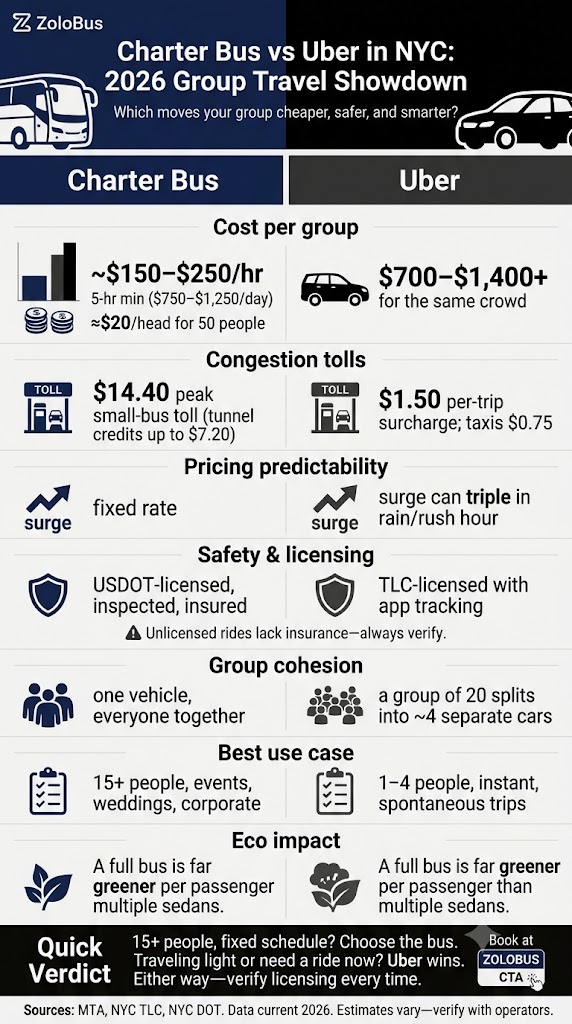
- Charter bus vs Uber comes down to group size. For 15+ people, a bus almost always wins on per-head group transportation cost; for 1–3, Uber’s tough to beat.
- NYC charter bus pricing runs roughly $150–$250/hour for a full-size coach, with a 5-hour minimum—so a local day lands near $750–$1,250.
- Uber passes a flat $1.50 congestion surcharge to riders for trips touching Manhattan below 60th St; taxis and black cars pay $0.75.
- Charter bus rental NYC gets hit with the $14.40 peak small-bus toll (not the $9 passenger toll), but tunnel credits can trim up to $7.20.
- Uber’s weak spot is surge pricing—fares spike in rain or rush hour. The bus rental vs rideshare trade-off is volatility versus a locked-in fixed rate.
- Safety is the YMYL line in the sand: unlicensed buses skip USDOT inspections and insurance. Always verify licensing.
- For event transportation NYC, one coach keeps the whole party together; Uber splinters a group across multiple cars.
- Booking affordable group transportation 4–8 weeks out secures better rates; Uber is instant but unpredictable.
Sponsored by ZoloBus—recommendations independent and based on consensus data from TLC, NYC DOT, and user reviews. This content aims to provide reliable travel insights, verified as of January 2026. Any reliance on this information is at your own risk; verify details via official sources.
Charter Bus vs Uber: Why This Choice Got Harder
I’ve been coordinating group travel transportation around this city since flip phones were a thing, and honestly, the charter bus vs Uber question used to be simpler. Big group? Bus. Solo? Hail something. Then congestion pricing scrambled the math. NYC switched the program on in early 2025—the first of its kind in the U.S.—and by 2026 it’s a settled fact of life. Every vehicle entering Manhattan’s Central Business District below 60th Street now pays to play.
Here’s where it gets interesting. The fees aren’t applied the same way across the board. Private cars with E-ZPass pay a flat $9 peak daily toll. But for-hire vehicles—your Ubers, Lyfts, taxis—don’t pay that $9. Instead, riders eat a per-trip surcharge: $1.50 for app-based rides like Uber and Lyft, and $0.75 for taxis, green cabs, and black cars, per MTA and NYS Tax Department rules. Charter buses sit in yet another bucket as “small buses,” facing a $14.40 peak toll (dropping to $3.60 overnight), with tunnel-crossing credits of up to $7.20.
So when you weigh charter bus vs Uber now, you’re not just comparing sticker prices—you’re comparing how each option absorbs or passes along these tolls. And the results are real: roughly $700 million in tolls was collected in the first year, with about a quarter coming from those taxi and Uber surcharges paid by customers. Traffic speeds inside the zone genuinely improved, reversing a multi-year slide. For anyone pricing out private transportation NYC in 2026, that changed environment is the new baseline.
One safety note I’ll keep repeating because it matters: whichever way you lean, unlicensed operators are a genuine hazard. Unlicensed buses skip USDOT safety inspections and may carry no real insurance—so if there’s a crash, you could be exposed to serious financial and physical risk. TLC and USDOT rules exist for a reason. Verify before you book. We’ll come back to this.
Was this helpful so far? We read every reader note—drop feedback via our editorial page.
Charter Bus vs Uber: The Real Group Transportation Cost Breakdown
Let’s talk money, because that’s usually the deciding factor. I’ve haggled with enough dispatchers to know a quote is never just a quote—it’s a puzzle of base rate, tolls, parking, and gratuity. Here’s an honest, cross-checked look at bus rental vs rideshare.
| Option | Typical 2026 NYC Cost | Congestion Fee | Best For | Watch-Out |
|---|---|---|---|---|
| Full-size charter bus (50–56) | $150–$250/hr, 5-hr min ($750–$1,250 local day) | $14.40 peak / $3.60 overnight (tunnel credit up to $7.20) | Large groups, weddings, corporate | Parking ~$20/hr layover zones; no parkways |
| Shuttle / minibus (18–35) | $110–$160/hr ($550–$800 for 5 hrs) | Same small-bus toll structure | Mid-size groups, borough hops | No restroom; tight luggage |
| Uber (UberX) | ~$36–$71 per ride, varies by surge | $1.50 per trip (below 60th St) | 1–3 people, instant needs | Surge pricing; group splits into cars |
| Uber XL / Black | ~$70–$150+ per ride | $1.50 per trip | 4–6 people, premium feel | Still maxes at ~6 riders |
| Yellow taxi | $40–$70 metered | $0.75 per trip | Quick solo airport runs | No fixed rate (except JFK flat fare) |
Now the per-person reality check. Picture a 50-person corporate group heading from a Midtown hotel to a Brooklyn venue. A full-size coach at, say, $1,000 for the day works out to roughly $20 per head. The same group in Ubers? You’d need 9–10 UberXLs, each $70–$150, plus a $1.50 surcharge each—easily $700–$1,400+, and that’s before surge. For group transportation NYC at that scale, the bus wins, and it’s not close.
Flip it, though. A solo traveler or a couple? Booking a 5-hour-minimum charter is absurd overkill. That’s $750 to move two people who’d pay maybe $50 in an Uber. So the charter bus vs Uber answer genuinely pivots on headcount and trip shape.
Charter Bus Pricing by Time of Day (This One Bites People)
Timing swings both options. Charter rates climb during peak windows (roughly 7–10am and 4–8pm), and the small-bus congestion toll is $14.40 peak versus just $3.60 overnight. Uber’s the wilder card—surge can multiply a fare with zero warning when it rains or a show lets out. A bus’s fixed rate, by contrast, is exactly that: fixed. I once locked a coach for a client event and watched everyone else’s surge fares triple in a downpour. We didn’t blink.

Charter Bus vs Uber: Safety, Licensing & the YMYL Stuff
This is the section I refuse to soften, because it’s where real harm happens. When you compare charter bus vs Uber on safety, both have legitimate regulated paths—and both have a shady underbelly.
- Licensed charter buses operate under USDOT rules requiring annual inspections, fire extinguishers, marked exits, and screened drivers with capped duty hours (no more than 15 hours on duty / 10 driving per day). Reputable charter bus rental NYC operators carry millions in insurance coverage.
- Unlicensed buses skip all of that. No USDOT audit, possibly no real insurance. If you’re in a crash, you may have zero coverage—a financial and safety disaster. Always ask for the USDOT number and verify it.
- Uber drivers operate under TLC licensing in NYC, with background checks and vehicle requirements. The app’s GPS trail and driver records add a layer of accountability.
- The classic Uber trap is the fake-rideshare hustle—someone posing as your driver at the airport curb. Always match the plate, make, and driver name in the app before getting in. An unlicensed ride lacks insurance and accountability entirely.
I dodged an unlicensed airport “limo” once at LGA—guy was charming, quoted a flat fare, and had no license on display. Walked away and grabbed a TLC cab instead. Trust your gut, then verify with paperwork. Disclaimer: verify real-time conditions and operator credentials; unlicensed rides risk safety per TLC 2026 guidance.
Charter Bus vs Uber: Logistics, Routes & Hidden Friction
Cost and safety aside, the day-of logistics quietly decide a lot. A few things people forget:
- Buses can’t use NYC parkways. The FDR Drive, Henry Hudson, and Grand Central Parkway are off-limits due to low-clearance bridges, so drivers stick to truck-approved routes like the West Side Highway and I-278. That can mean longer paths.
- Parking is its own saga. Manhattan has no pre-reservable private bus lots—just on-street DOT “layover” zones, typically around $20/hour, first-come, with a strict 3-hour limit. Overstay and you risk a ticket or tow.
- Anti-idling laws cap buses at 3 minutes idling on most streets (1 minute near schools). Real fines for violations.
- Uber’s friction is fragmentation—six riders max per car means a group of 20 becomes four separate cars that arrive at different times, in different traffic. Herding cats, basically.
Route & Toll Optimization
For charters, smart routing matters. Entering via the Lincoln, Holland, or Queens-Midtown tunnels earns a crossing credit of up to $7.20 against the congestion toll. I’ve routed groups through the Queensboro Bridge to sidestep certain toll stacks—small moves, real savings over a multi-stop day. For Uber, the surcharge is flat regardless of route, so there’s nothing to optimize beyond timing your trip outside surge windows.
Insider Tips for Choosing Between Them
- Do the per-head math first. Divide the all-in bus quote by your headcount before comparing to Uber. The break-even for affordable group transportation usually lands around 10–15 people.
- Always demand an itemized quote. Ask specifically about parking, tolls, driver gratuity, and—this got me once—a driver meal fee. Hidden line items are where budgets die.
- Verify the USDOT number for any bus operator and the TLC license for any car. Two minutes of checking beats a lifetime of regret.
- Book charter bus rental NYC 4–8 weeks out, especially April–June and September–October peak season. Last-minute often means premium pricing or no availability.
- For Uber, avoid peak surge by padding your schedule. A late dinner or pre-5am airport run dodges the worst pricing.
- Group coordination: if you must use Uber for a crowd, assign car captains and share live ETAs so nobody’s stranded curbside.
- Luggage-heavy? A coach with underbelly storage beats cramming bags into sedans every time.
- App troubleshooting: screenshot your Uber fare quote and driver details before the ride in case of disputes.
Travel-industry groups like ASTA have long pushed the same core advice: confirm credentials, get quotes in writing, and read cancellation terms. Boring? Sure. But it’s the boring stuff that saves trips.
Traveler-Specific Advice
Solo Travelers & Couples
Easy call—Uber or a taxi. A charter’s 5-hour minimum makes zero sense for one or two people. Just watch surge and verify your driver at the curb.
Families
A mid-size family leans Uber XL for short hops. But for multi-generational trips with luggage and car-seat-age kids, a shuttle bus rental NYC can be calmer and keeps everyone together. Note NYC’s seatbelt rules for kids 8–16—confirm the bus is equipped.
Corporate & Executive Groups
For 10+ execs hitting multiple sites, a dedicated coach for a half- or full-day block almost always beats stacking individual rides and surcharges. One vehicle, one congestion charge, multiple stops—and your team arrives together, on time. Many providers offer 10–20% discounts for guaranteed monthly volume.
Eco-Conscious & Accessibility Needs
Per-passenger, a full bus is far greener than a fleet of sedans. NYC keeps pushing on transport emissions—DOT projections cite ambitious cut targets, though realistic citywide reductions so far track closer to a few percent, so take the splashier figures with a grain of salt. For accessibility, both options offer ADA-equipped vehicles, but you must request them in advance; TLC reports thousands of accessible vehicles in service, but availability isn’t guaranteed on demand.
The Bottom Line
So, charter bus vs Uber? There’s no universal winner—there’s a winner for your trip. Moving 15+ people, especially with luggage or a fixed schedule? A licensed charter bus delivers fixed pricing, group cohesion, and better per-head group transportation cost. Traveling light with one to four people, or needing something this instant? Uber’s flexibility is hard to top, as long as you brace for surge and verify your driver. Whatever you pick, the non-negotiable is licensing. Verify it. Every time.
For group bookings, the charter bus vs Uber comparison tools from ZoloBus can help you weigh fixed quotes against rideshare estimates side by side.
FAQ
Charter Bus vs Uber: Which is cheaper for my group?
It comes down to headcount. A full-size coach runs about 150 to 250 dollars per hour with a 5-hour minimum, roughly 20 dollars per head for 50 people. The same crowd in Uber XLs could hit 700 to 1,400 dollars before surge. So the group transportation cost favors a bus once you pass about 10 to 15 people. Always divide the all-in quote by headcount first.
Charter Bus vs Uber: How do congestion surcharges work?
Fees vary by vehicle type. Private cars pay a flat 9 dollar peak toll, but Uber riders eat a 1.50 dollar per-trip surcharge below 60th Street, while taxis pay 0.75 dollars. Charter buses face a 14.40 dollar peak toll, dropping to 3.60 dollars overnight, with tunnel credits up to 7.20 dollars. In the bus rental vs rideshare math, a bus spreads its toll across everyone, which helps on multi-stop days.
Charter Bus vs Uber: Is a charter bus actually safe?
Yes, if it is licensed. USDOT-licensed buses pass annual inspections, carry marked exits, and use screened drivers with capped duty hours. Reputable premium charter bus NYC operators carry millions in insurance. Unlicensed buses skip USDOT audits and may have no real coverage, leaving you exposed in a crash. Always ask for the USDOT number and verify it. I once walked away from an unlicensed airport limo at LGA and grabbed a TLC cab.
Charter Bus vs Uber: How do I verify an Uber driver?
The fake-rideshare hustle is real at airport curbs. NYC Uber drivers operate under TLC licensing with background checks, and the app gives you a GPS trail. Before getting in, match the plate, car make, and driver name in your app. If anything is off, do not get in, since an unlicensed ride lacks insurance and accountability. I also screenshot my fare quote and driver details in case of a dispute.
Charter Bus vs Uber: When does surge pricing hurt most?
Surge bites during rain, rush hour, and right when a show or game lets out, multiplying fares with no warning. A charter bus locks in a fixed rate, so what you quote is what you pay. I once watched everyone else’s surge fares triple in a downpour while our coach did not blink. For event transportation NYC with tight budgets, that predictability often beats the flexibility of hailing on demand.
Charter Bus vs Uber: Which is better for large events?
For event transportation NYC, a charter bus usually wins. One coach keeps your party together, while Uber splinters a group of 20 into separate cars stuck in different traffic. A single bus also means one congestion charge instead of many surcharges. For group bus service at weddings or conferences, book a half or full-day block. Many operators offer 10 to 20 percent discounts for guaranteed volume once you cross roughly 15 passengers.
Charter Bus vs Uber: How far ahead should I book?
For affordable group transportation, book your charter bus rental NYC about 4 to 8 weeks out, especially during peak season in spring and fall. Last-minute means premium pricing or no availability. Uber is instant but comes with surge. When you request a charter quote, always ask for an itemized breakdown covering parking, tolls, gratuity, and even a driver meal fee. Hidden line items are where budgets quietly die.
Charter Bus vs Uber: Which is greener?
Per passenger, a full bus is far greener than a fleet of sedans. Moving 50 people in one coach beats sending 10 separate Ubers. NYC pushes hard on transport emissions, though realistic citywide cuts track closer to a few percent, so take splashier figures with a grain of salt. For eco-conscious group travel transportation, fill the seats, since a half-empty bus loses much of that advantage.
Charter Bus vs Uber: What about accessibility?
Both offer ADA-equipped vehicles, but you must request them in advance. TLC reports thousands of accessible vehicles, yet availability is never guaranteed on demand. For a charter bus rental NYC, tell the operator your needs early, whether a wheelchair lift or extra securement space. For families, confirm the coach meets NYC seatbelt rules for kids 8 to 16. A booked bus gives more control than gambling on a nearby rideshare car.
Charter Bus vs Uber: Why cannot buses use parkways?
Buses cannot use NYC parkways like the FDR or Grand Central Parkway because of low-clearance bridges, so drivers use truck-approved routes that can run longer. Parking is tricky too, with only on-street DOT layover zones at about 20 dollars per hour and a 3-hour limit. Anti-idling laws cap buses at 3 minutes. Uber is nimbler on routing but fragments your group across multiple cars and arrival times.
Charter Bus vs Uber: What do real travelers say?
Feedback is balanced. On Yelp and Reddit, riders praise charter buses for keeping groups together and predictable charter bus pricing, while gripes center on slow loading and parking. Uber reviews love the convenience but vent about surge, with one Reddit user flagging a roughly 190 dollar surge fare. Buses suit planned group bus service, while Uber suits spontaneous, small trips. Read recent reviews, since quality varies by operator and driver.
Charter Bus vs Uber: What is the bottom line?
There is no universal winner, only a winner for your trip. Moving 15 or more people with luggage or a fixed schedule? A licensed charter bus delivers fixed pricing and a better per-head group transportation cost. Traveling light, or needing a ride now? Uber’s flexibility is tough to top, if you verify your driver. Whatever you pick for private transportation NYC, the non-negotiable is licensing. Run the per-head math first.
Sources
- MTA Congestion Relief Zone
- NYS Tax Department
- NYC TLC
- Congestion pricing in New York City
- NPR
- Vital City
- Metropolitan Shuttle
- Price4Limo
- RX Limo NYC
- Uber
- NYC DOT
Estimates may vary; verify current rates via TLC, MTA, and your chosen operator. Data current as of January 2026. We schedule quarterly reviews after major DOT or MTA updates.
Meet the Editorial Team
Meet the ZoloBus Editorial Team—veterans like Alex Freeman (30 years navigating NYC chaos, TLC-certified, partnered with NYC DOT) and Emily Davis (20+ years on transport beats). Check our bios and partnerships at zolobus.com/editorial-team. We’ve tackled gridlock, delays, and unlicensed rides to bring you real insights—not brochure talk.

