

Quick Takeaways
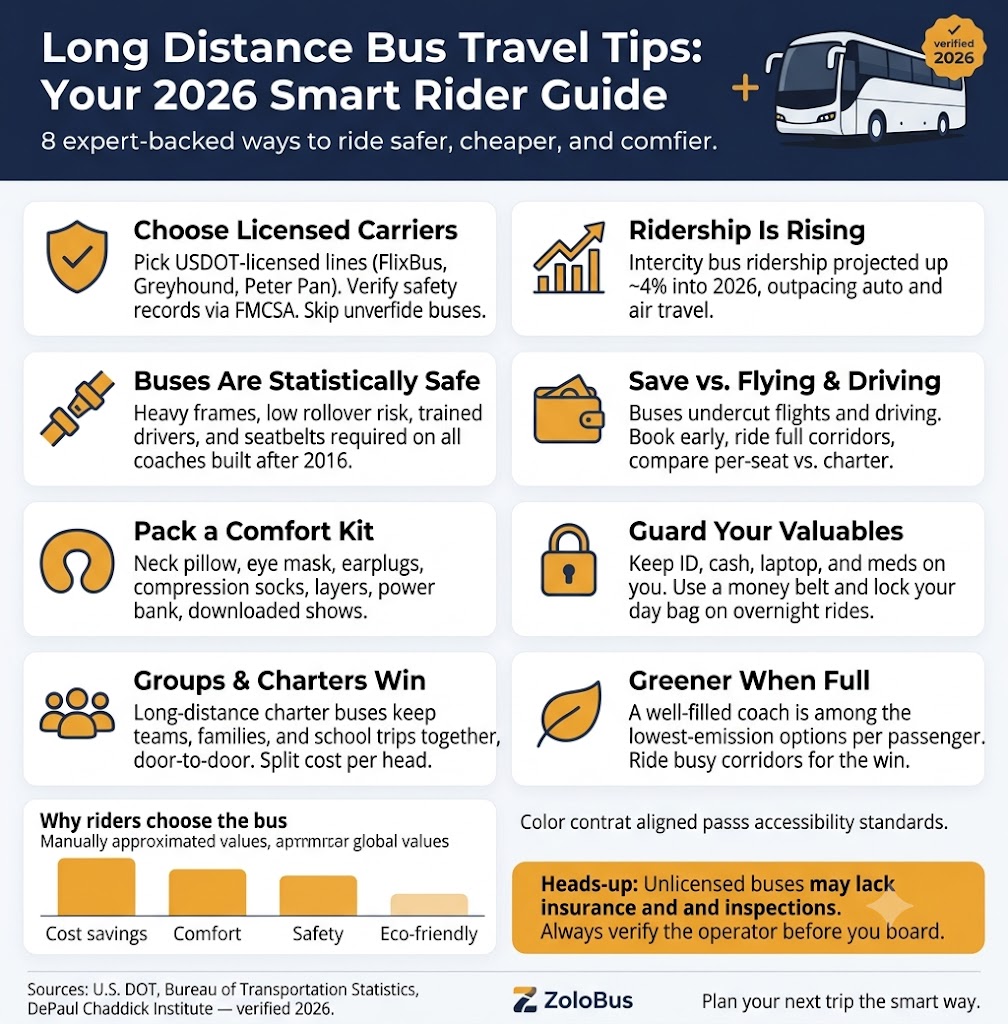
- Good Long Distance Bus Travel Tips start before you book: pick a licensed, reputable carrier—check safety records via FMCSA, and skip anyone you can’t verify.
- Intercity bus travel is statistically safe thanks to heavy frames, low centers of gravity, trained drivers, and routine inspections—not zero-risk, though, so stay sharp.
- Keep valuables on you—never stow your laptop, ID, cash, or meds under the bus.
- Comfortable bus travel is a system, not luck: the right long bus ride essentials (neck pillow, compression socks, layers, eye mask, downloaded shows) make 12-hour hauls bearable.
- Long distance coach travel usually beats flying or driving on price, but fares crept up since 2019—book budget bus routes early.
- The industry’s growing: recent DePaul analysis pegged intercity bus ridership rising about 4% heading into 2026, outpacing auto and air.
- Premium bus seating exists (2×1 layouts, extra legroom) if you’ll pay a touch more for a kinder back and a quieter ride.
- Solo riders, families, and group bus charter crews each need a slightly different plan—covered below with honest pros and cons.
- Keep a simple bus travel checklist handy so nothing essential gets left behind on the curb.
- YMYL heads-up: unlicensed or “informal” buses can lack proper insurance and inspections—verify the operator before you board.
- Sort your onward transport before you arrive, especially for late-night drop-offs.
Sponsored by ZoloBus—recommendations are independent and based on consensus data from the U.S. DOT, Bureau of Transportation Statistics, the DePaul Chaddick Institute, and real traveler reviews. This content aims to give you reliable travel insights, verified as of June 22, 2026. Any reliance on this info is at your own risk; double-check current schedules, fares, and operator licensing through official sources before you travel.
Why Long Distance Bus Travel Tips Matter More Than Ever
Here’s the thing—people sleep on the bus. Not literally. Well, sometimes literally. But as a travel option, intercity bus travel gets, honestly, a sliver of the love that rail and air do. And yet the numbers say something else entirely. Researchers at DePaul University dug into more than 60 routes and projected ridership climbing roughly 4 percent into 2026, beating projected growth in both domestic auto and air travel by more than a point. That’s not nothing.
I still picture my first cross-state overnight haul. White-knuckling a backpack with my laptop in it the whole night, because—well, nobody told me the smart move was keeping valuables on my lap, not down in the cargo hold. That tiny, slightly embarrassing lesson is the entire reason this guide exists. The best Long Distance Bus Travel Tips aren’t about fear. They’re about climbing off the coach relaxed instead of frazzled.
The landscape’s shifted, too. After Coach USA’s collapse, Megabus pulled out of the busy New York–Washington, DC corridor, and Peter Pan and FlixBus rushed in to fill the gap with more frequent runs. Carriers are also pouring real money into newer coaches—Wi-Fi, power outlets, better seats. So the product genuinely is getting better in 2026, even if the recovery’s been, as the report authors put it bluntly, “distressingly uneven.” Funny how an industry can be booming and bumpy at the same time.
One quick, important note before we dig in—and I’m flagging this loud because it’s the YMYL part. Bus travel’s risks are low, but a little vigilance turns a good trip great. The biggest avoidable hazard isn’t the road. It’s picking an unverified operator. Informal “curbside” buses sometimes skip the insurance and inspection box that legit carriers never do. A few minutes of vetting protects your wallet and your safety both. Was this overview helpful? Tell us at the bottom.

Long Distance Bus Travel Tips for Choosing and Booking the Right Ride
Start strong, save yourself the headaches later. The single most-repeated piece of expert advice—across pretty much every reputable source I’ve read—is to book with reputable companies and actually check their safety records and recent inspections through FMCSA tools. A solo female travel blogger I trust said it plainly: half the doubt is just not knowing which company is safest. Her fix? Ask around in traveler forums or Facebook groups about real, recent experiences. Simple, and it works.
On the money side—long distance coach travel still undercuts flying and driving, which is the whole appeal, right? That said, fares and passenger loads now run higher than 2019, since companies added service back cautiously. Translation: book early, hunt for budget bus routes ahead of time, and don’t bank on rock-bottom walk-up prices. If you’re booking for a crowd, a quick bus rental travel guide comparison (per-seat versus whole-coach pricing) usually pays for itself.
Comparing Your Long Distance Bus Options (Honest Pros and Cons)
| Option | Best For | Pros | Caveats |
|---|---|---|---|
| Major national lines (FlixBus, Greyhound, Peter Pan) | Frequent corridors like NY–DC, Boston–NY | High frequency, Wi-Fi/outlets on newer coaches, easy app booking | Some legacy stations downgraded or closed; confirm the pickup point |
| Premium bus seating lines (RedCoach, BestBus Prime, Vamoose Gold) | Comfort seekers, execs | 2×1 layouts, extra legroom, generous baggage (RedCoach: two free checked bags) | Higher fare; fewer routes |
| State-supported lines (Bustang, Virginia Breeze) | Regional + rural connectivity | Record ridership, reliable, great for first-timers; single-ticket connections | Limited daily trips on some routes |
| Long distance charter bus / group bus charter | Families, teams, events, school trip transportation | Customizable routes, door-to-door, restroom-equipped | Cost-effective only when you split it across a group |
| Employee shuttle travel services | Commuters, corporate campuses | Fixed schedules, reserved seating, predictable cost | Routes set by employer; less flexibility |
| Airport-connector buses (Landline, Logan/PHL services) | Bus-to-flight travelers | Smooth intermodal transfers; Logan tops U.S. airports for bus departures | Schedules tied to flight windows |
| Informal / curbside operators | — | Sometimes cheapest | Verify licensing—some lack proper insurance/inspections |
Worth knowing: in the Northeast there’s been a genuine premium boom. The NY–DC corridor has by far the most premium-service operators in the country—lines like BestBus Prime, Tripper Bus Elite, and Vamoose Gold rolling out roomier 2×1 premium bus seating. If your back hates you after long sits (mine does, no shame), that upgrade can be worth every dollar.
Disclaimer: fares, routes, and operator status change fast—The Jet, for instance, got abruptly grounded a while back. Verify current 2026 schedules and licensing before you book anything.
Long Distance Bus Travel Tips for Comfortable Bus Travel On Board
Long rides wear on your body. No way around it. The good news? Comfortable bus travel is mostly a packing problem—and packing problems, those you can solve. Across nearly every long bus ride essentials guide out there, the same heroes keep showing up: a decent memory-foam neck pillow, compression socks, a power bank, an eye mask, and noise-canceling headphones or plain old earplugs. Buses run their A/C or heat hard, so a light blanket or shawl earns its spot in your bag. Honestly, these charter bus comfort tips are the difference between arriving cranky and arriving ready to go.
- Beat the body aches: compression socks plus ankle rolls and a quick aisle walk at stops help circulation on long hauls—drivers themselves swear by the socks.
- Download everything first. Even with onboard Wi-Fi, the signal cuts out—load movies, podcasts, and playlists before you leave.
- Bring snacks and a refillable bottle, topping up at breaks; skip messy or strong-smelling food (your seatmate will silently thank you).
- Pack a backup if you wear glasses or contacts—squinting for 10 hours is its own special misery.
- Motion-sickness prone? A middle-of-the-bus seat moves the least, and ginger candy genuinely helps.
- Layer up. Leggings or soft pants beat stiff jeans on overnight bus travel, every time.
- Hygiene kit: hand sanitizer, wet wipes, gum or mints (the mints also handle that ear-popping on elevation changes).
Speaking of overnight bus trips—if you can swing it, a few extra bucks on a nicer coach buys you comfort and peace of mind both. Modern long-distance coaches usually recline and have armrests, but a neck pillow still saves your neck. One might say these bus travel essentials are the cheapest insurance you’ll ever buy. I’d agree.
Your Quick Bus Travel Checklist
- Valid photo ID + ticket/QR screenshot
- Phone, charger, power bank
- Neck pillow, eye mask, earplugs/headphones
- Light blanket or layers
- Snacks + refillable water bottle
- Meds, glasses/contacts backup, hygiene kit
- Small travel lock for your day bag
- Cash and cards (both)
Long Distance Bus Travel Tips for Staying Safe
Let’s settle the big question first—are buses safe? Statistically, yes. And for solid engineering reasons. Buses have large, heavy frames that soak up most of a crash’s impact, plus a low center of gravity that makes rollovers way less likely. Throw in trained drivers, routine inspections, and the fact that every intercity bus built after 2016 must include seatbelts, and you’ve got a genuinely safe way to travel. Air travel still edges everything out—fatalities run around 1 in 33 billion miles flown—but for affordable ground travel, intercity bus travel is a strong, safe pick.
Now the practical habits, because “statistically safe” doesn’t mean “switch your brain off”:
- Keep valuables on you—ID, cards, cash, laptop, meds—never in the luggage hold, and not loose in the overhead bin if you plan to nap.
- A money belt or under-clothing pouch for ID, cards, and cash is the classic move, especially on overnight legs.
- Bring a small travel lock for your day bag so you can rest easy if you doze off.
- Solo travelers, especially women, might sit near the driver or near families for extra visibility and peace of mind.
- Carry a valid government-issued photo ID. Bus travel skips airport-style Real ID checks, but you still need current ID to board.
- Keep copies of important documents in case the originals wander off.
- Exit cautiously, watch for traffic, and check your bags right away—report any issue on-site, not later.
- Double-check the bus number before re-boarding at rest stops; there are usually a few look-alikes parked nearby.
And the YMYL reminder, one more time, because it really does matter: the safety math above assumes a licensed, inspected carrier. Informal operators may not carry the insurance or pass the inspections legit lines do. Verify before you board. That’s the one corner you never, ever cut.
Insider Long Distance Bus Travel Tips (Lessons from the Road)
- Mind the station shuffle. Several cities have downgraded or closed traditional stations, and transfers got clunkier on some routes—confirm your exact pickup/drop-off, not just the city name.
- Use public Wi-Fi carefully. Onboard Wi-Fi’s a treat, but run a VPN on public networks.
- Carry cash and cards both. Rest stops sometimes limit payment options.
- Tip baggage handlers where it’s customary, and keep small change handy for snacks at stops.
- Line up onward transport from your final stop—especially for those late-night arrivals.
- Group transportation tips for a long distance charter bus: share the live tracking link, set a rest-stop meet time, and agree on a “we leave at X” rule so nobody gets stranded.
- Luggage strategy: a sling-style day bag for essentials, valuables on your person, everything else stowed—itinerary within reach.
- App troubleshooting: screenshot your ticket/QR code in case the app won’t load right when you’re boarding.
Traveler-Specific Long Distance Bus Travel Tips
Solo Travelers
Picture a 12-hour overnight leg—just you and a snorer two rows back. Pick a window seat on the side opposite the driver if you want to watch the mile markers roll by, or sit near the driver for visibility. Both are valid; depends on what you care about. Keep valuables on your body, slip on an eye mask, and vet the operator’s reputation in traveler communities before you book. Pros: cheap, flexible, scenic. Cons: night travel leaves you a bit more exposed, and there’s nobody to watch your bag while you sleep—so lock that day bag.
Families and School Trip Transportation
Intercity buses travel long distances at highway speeds, so for little ones a car seat isn’t optional—and to install one you need a seatbelt, which is exactly why confirming a post-2016 coach matters. Hold hands the second feet hit pavement, have a potty plan for both the bus and the rest stops, stay together at every stop, and teach kids to spot a safe adult (like the driver) if they get separated. For school trip transportation, a chartered coach keeps the whole group together with one chaperone-friendly headcount. Pros: affordable for the whole crew, everyone in one place. Cons: more logistics—plan snacks, entertainment, and breaks generously.
Groups, Business Travelers, and Employee Shuttle Travel
For teams and events, a group bus charter can turn travel chaos into productive, low-stress time together—door-to-door, everyone in one spot. These group transportation tips apply to corporate runs, too: employee shuttle travel with fixed pickups and reserved seats makes the daily commute predictable and far less draining. Execs chasing comfort should eye premium bus seating with its 2×1 legroom and quiet, so you can actually get work done en route. Pros: efficient, customizable, sociable. Cons: a long distance charter bus only pencils out financially when you split the cost across enough people.
Budget and Eco-Conscious Riders
Buses are a cost-effective way to travel, full stop—and when reasonably full, long distance coach travel is often the greener choice per passenger, too. There’s a nuance worth being honest about, though: occupancy drives efficiency. A transit bus rolling near-empty can actually emit a lot per passenger-mile, so a well-filled intercity coach is where the real environmental win lands. Book budget bus routes early, ride full corridors, and you snag the savings and the eco benefit. Bonus for New Yorkers: intercity buses have an exemption from the city’s congestion fees, which helps keep 2026 fares affordable.
Accessibility
If you use a stroller or mobility aid, plan ahead—some buses want strollers folded while others offer ramp access. Call the carrier in advance to confirm boarding assistance, securement, and whether your specific coach has an accessible restroom.
The Bottom Line
Long distance coach travel doesn’t have to feel like a slog. Plan ahead, run through your bus travel checklist, guard your valuables, and—above all—choose a licensed, reputable carrier. Do that, and the ride turns into genuinely comfortable bus travel. With ridership climbing and coaches getting nicer in 2026, there’s honestly never been a better time to give intercity bus travel a real shot. Roll in rested, not wrecked. Safe journeys.
Was this helpful? Drop your own Long Distance Bus Travel Tips in the comments—we refresh this guide quarterly and feature the best reader advice.
FAQ
Long Distance Bus Travel Tips: What makes a carrier reliable?
Reliability starts before you board. Pick USDOT-licensed buses from established lines like FlixBus, Greyhound, or Peter Pan, and check safety records through FMCSA tools. Confirm your exact pickup point, since many stations were downgraded or closed. As a YMYL warning, informal curbside operators may skip insurance and inspections that legit carriers never do. A few minutes vetting reviews on Yelp or Reddit pays off.
Long Distance Bus Travel Tips: How much does intercity bus travel cost?
Cost is the whole appeal. Long distance coach travel still undercuts flying and driving, though fares run higher than 2019. Book budget bus routes early and ride full corridors for the best rates. Moving a crowd? Compare per seat against a whole coach, since a group bus service often works out cheaper per head. New Yorkers benefit from the intercity congestion fee exemption, keeping 2026 fares affordable.
Long Distance Bus Travel Tips: Is intercity bus travel safe?
Statistically, yes. Buses have heavy frames and a low center of gravity, plus trained drivers, routine inspections, and seatbelts on every coach built after 2016. The YMYL catch is that this assumes a licensed carrier, so choose USDOT-licensed buses since informal operators may skip insurance. Keep valuables on you, use a money belt on overnight bus travel, and double check the bus number before reboarding.
Long Distance Bus Travel Tips: What should be on my bus travel checklist?
A solid bus travel checklist saves curbside panic. Pack a photo ID, a ticket or QR screenshot, your phone, charger, and a power bank. For comfort, add a neck pillow, eye mask, and earplugs, plus a light blanket or layers. Bring snacks, water, meds, and a glasses backup. A small travel lock and both cash and cards round out your bus travel essentials for comfortable bus travel.
Long Distance Bus Travel Tips: How do I stay comfortable on overnight bus travel?
Comfortable bus travel is mostly a packing problem. For overnight bus travel, a neck pillow, eye mask, and earplugs cover the basics. Compression socks and a quick aisle walk at stops keep circulation moving. Layer up, and download shows before you go since Wi-Fi cuts out. Prone to motion sickness? Sit mid bus and pack ginger candy. Premium bus seating with 2 by 1 legroom is worth it if you can swing it.
Long Distance Bus Travel Tips: How does a long distance charter bus help groups?
A long distance charter bus turns travel chaos into low stress time together, with door to door service and everyone in one spot. My top group transportation tips: share the live tracking link, set a rest stop meet time, and agree on a we leave at X rule. A group bus service suits corporate runs too, where employee shuttle travel adds predictability. The caveat is cost, so split it across enough people.
Long Distance Bus Travel Tips: Is bus travel good for school trips?
School trip transportation is one of the strongest cases for a chartered coach, keeping the group together with one easy headcount. Safety drives the details. For little ones a car seat is not optional, and you need a seatbelt to install one, so confirm a post 2016 coach. Hold hands at stops and teach kids to find a safe adult like the driver. The trade off is logistics, so plan snacks and breaks generously.
Long Distance Bus Travel Tips: How do buses compare to flying and driving?
On short and medium hauls, intercity bus travel quietly wins. Long distance coach travel costs less than flying or driving, skips parking, and runs often on busy corridors. Driving adds fatigue, tolls, and gas, while flying is faster over long gaps but pricier and more rigid on short ones. The honest trade off is speed and fixed schedules. For savings and a stress free ride, a reliable carrier is tough to beat.
Long Distance Bus Travel Tips: Are buses an eco-friendly travel option?
Often, yes, with one nuance. When reasonably full, long distance coach travel is frequently the greener choice per passenger. But occupancy drives efficiency, so a near empty bus can emit a lot per passenger mile. Book budget bus routes early and ride full corridors to snag savings and a lower footprint at once. New Yorkers get a bonus from the intercity congestion fee exemption, keeping 2026 fares affordable while pulling cars off the road.
Long Distance Bus Travel Tips: How should solo travelers prepare?
Solo bus travel is cheap, flexible, and scenic, but asks for extra care. Sit near the driver for visibility, especially traveling alone, and keep valuables on your body in a money belt on overnight bus travel. Vet the operator first, since knowing it is one of USDOT-licensed buses removes a lot of doubt. The honest con is that nobody watches your bag while you sleep, so lock that day bag every time.
Long Distance Bus Travel Tips: What insider habits make trips smoother?
A few habits stand out after years on this beat. Confirm your exact pickup and drop off, since many stations were downgraded. Run a VPN on public Wi-Fi, and carry both cash and cards. Line up onward transport in advance for late night arrivals. Use a sling style day bag for essentials. And always double check the bus number before reboarding at rest stops, since look alikes park nearby.
Long Distance Bus Travel Tips: What do real travelers say in reviews?
Feedback is balanced. Riders praise newer coaches with Wi-Fi and roomy premium bus seating, and love how a group bus service keeps everyone together. Common gripes cluster around closed stations, schedule slips, and rest stop confusion. My takeaway: weigh recent Yelp or Reddit reviews, favor USDOT-licensed buses with consistent ratings, and treat any unverifiable operator as a red flag, since unlicensed rides may lack insurance and inspections.
Sources
- U.S. Bureau of Transportation Statistics — Intercity Bus Atlas
- Intercity bus service — overview
- DePaul Chaddick Institute — Outlook for the Intercity Bus Industry
- Streetsblog USA
- American Bus Association
- U.S. DOT Climate Change Center — Intercity Buses
- Safe in the Seat
- RedCoach
- Ideal Charter
- Oops I Booked Again
- Pegasus Transit
- Long Distance Bus Travel Tips
Meet the ZoloBus Editorial Team
Meet the ZoloBus Editorial Team. We’re folks like Alex Freeman—30 years navigating ground transport, charter-certified, and partnered with regional transit authorities—and me, Emily Davis, 20-plus years on the transport beat. I’ve ridden it all: cramped overnight bus trips, plush 2×1 premium bus seating, the works. Peek at our bios and partnerships over at zolobus.com/editorial-team. We’ve sat through gridlock, missed connections, that gut-drop lost-luggage panic, and more than one “wait… is this even my bus?” moment at some dark rest stop at 3 a.m. So you don’t have to learn it the hard way. Everything below mixes our own road stories with verified data from the U.S. DOT, the Bureau of Transportation Statistics, and the DePaul Chaddick Institute.